Ultrahuman Home
A health tracker for the room you sleep in.
Most health devices measure your body. Ultrahuman Home measures the room around it: the light, the air, the temperature and the noise, right through the night. In the morning the room gets a score, and if you wear the Ring it sets what happened around you beside what happened inside you, so a bad night comes with a reason rather than a shrug. A warm room, a noisy street, air that went stale at two in the morning. This is the website that sells it and the app that reads it back to you. There is no screen on the device and nothing to wear, so both had to make something invisible feel real: renders that turn in the light, a page that builds the product as you scroll, and an app that resolves a night of readings into a single number you can act on. And because a microphone in a bedroom is the thing people stop at, the answers sit right there next to it rather than in the small print at the bottom.
Web & Product Design: Nachiket Palkar
Nothing to wear, nothing to watch
The Ring goes on your finger. The Home just sits on a shelf and gets on with it. Nothing to charge nightly, nothing to strap on, which is the easiest sell in the world once you believe it works, so the page opens on the object turning slowly in the dark and spends its first screen earning that belief.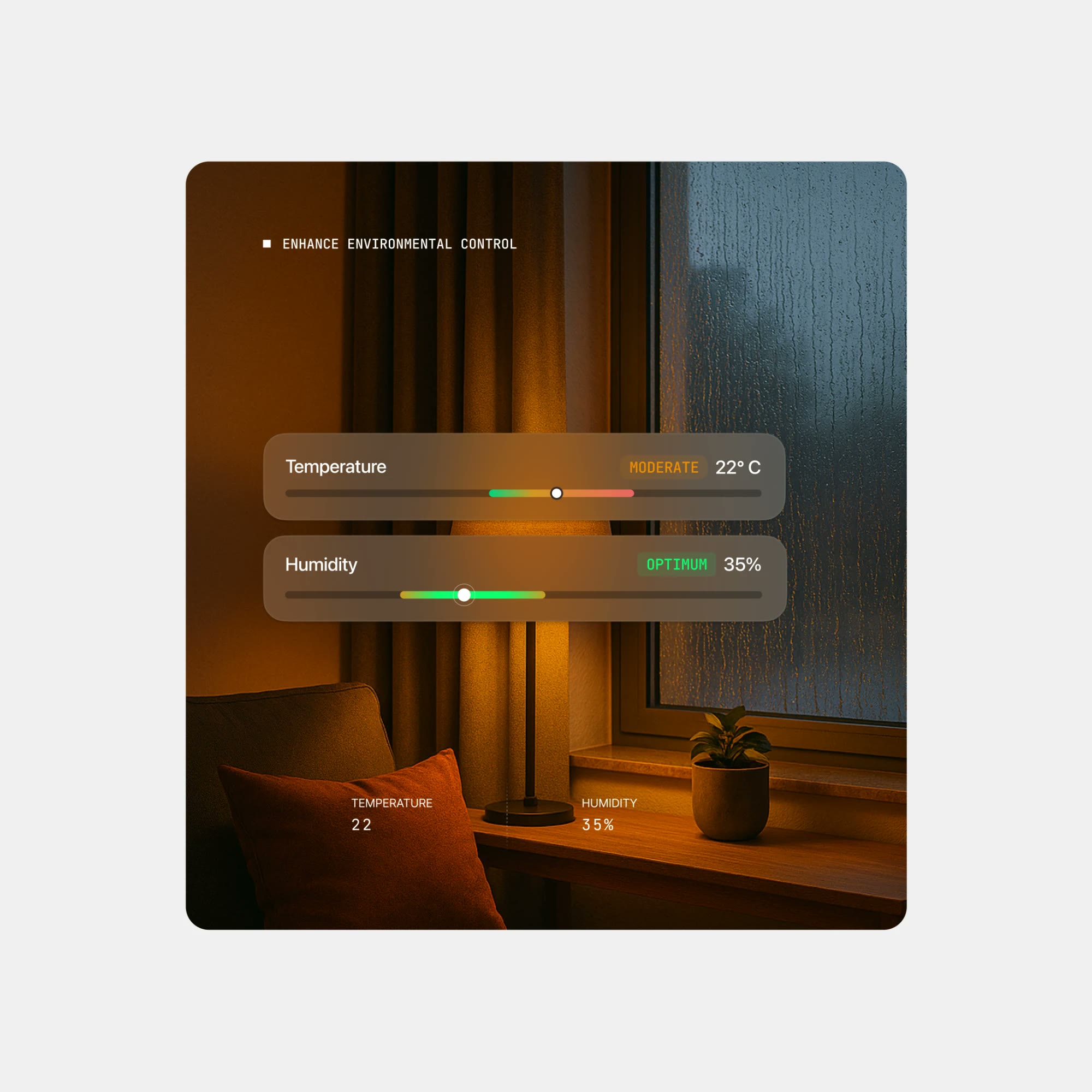
The page builds the product
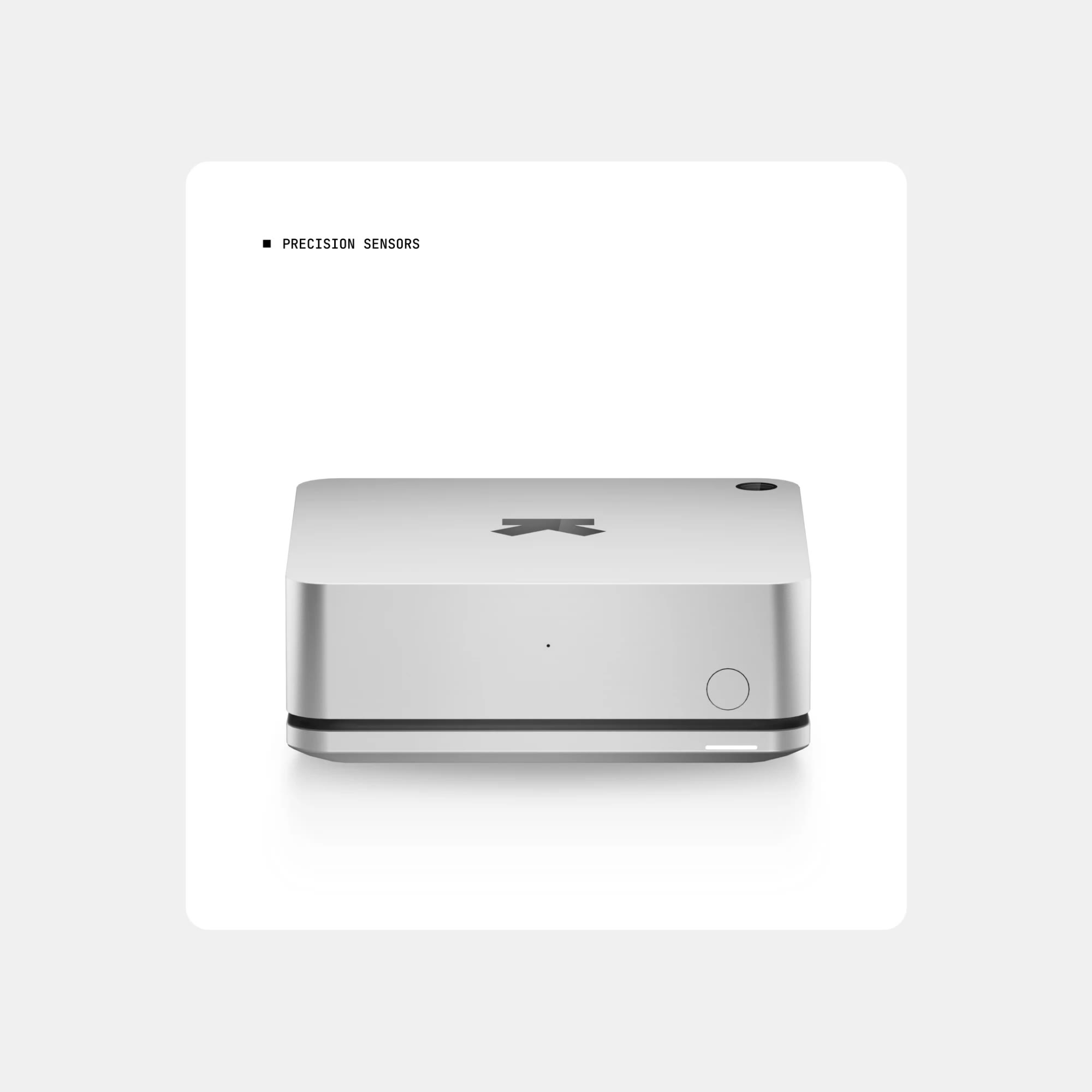
The second screen does not cut to a new picture, it assembles one. The headline arrives around the device a line at a time as the page is scrolled, so the words and the object land together rather than the copy explaining a photograph that was already sitting there. Scroll is the only control a landing page has, so it was given something to do.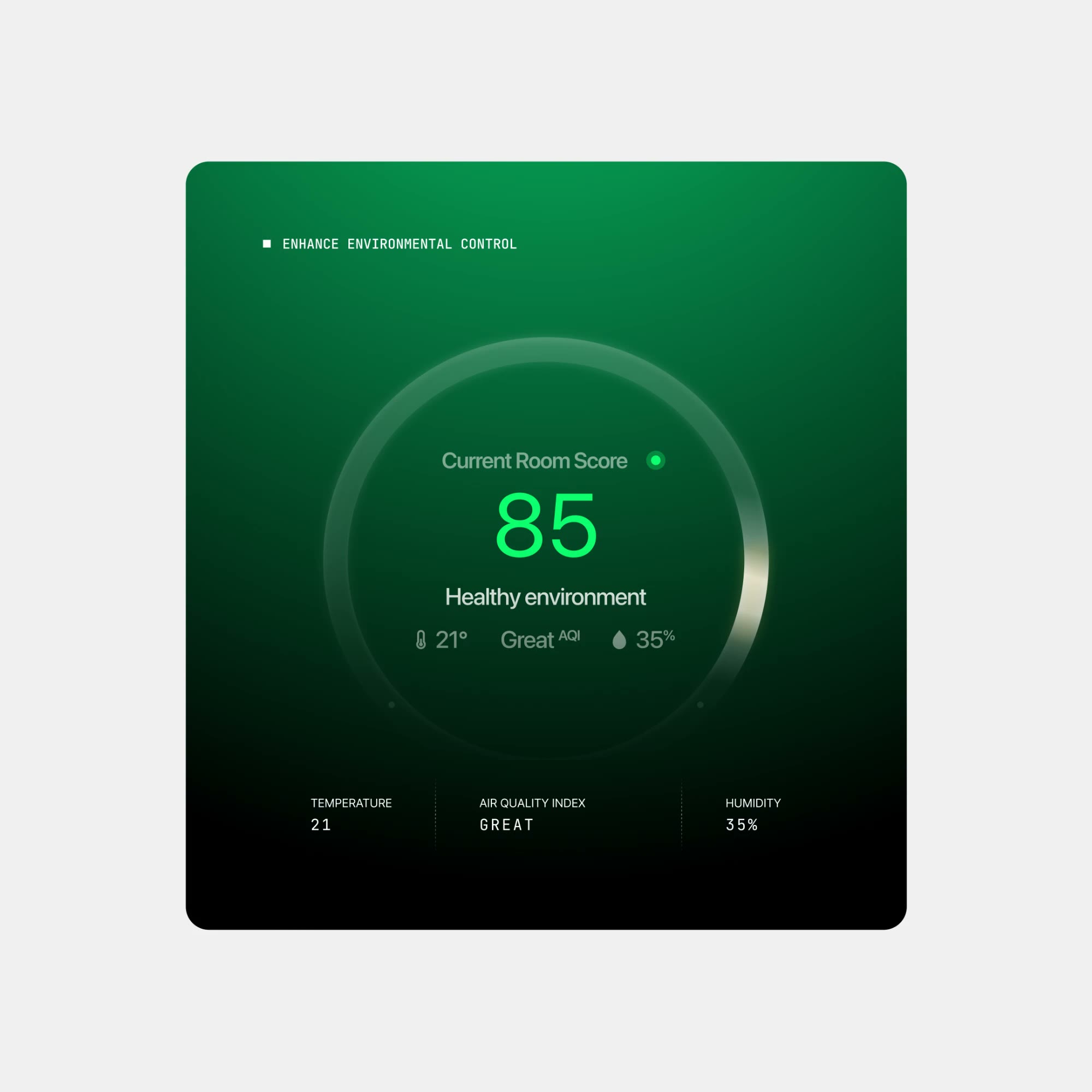
A full night, not a snapshot
Temperature, humidity, carbon dioxide and noise are read all night rather than sampled, and this section assembles the Ambient Sleep Score out of them as you scroll. It also listens for snoring and coughing, which is the sentence people stop at, so the answers sit in the same stretch of page rather than in a compliance note at the foot of it: a physical switch that cuts the microphone, audio deleted after two days, HIPAA and GDPR. Anyone still unconvinced has stopped scrolling long before the footer.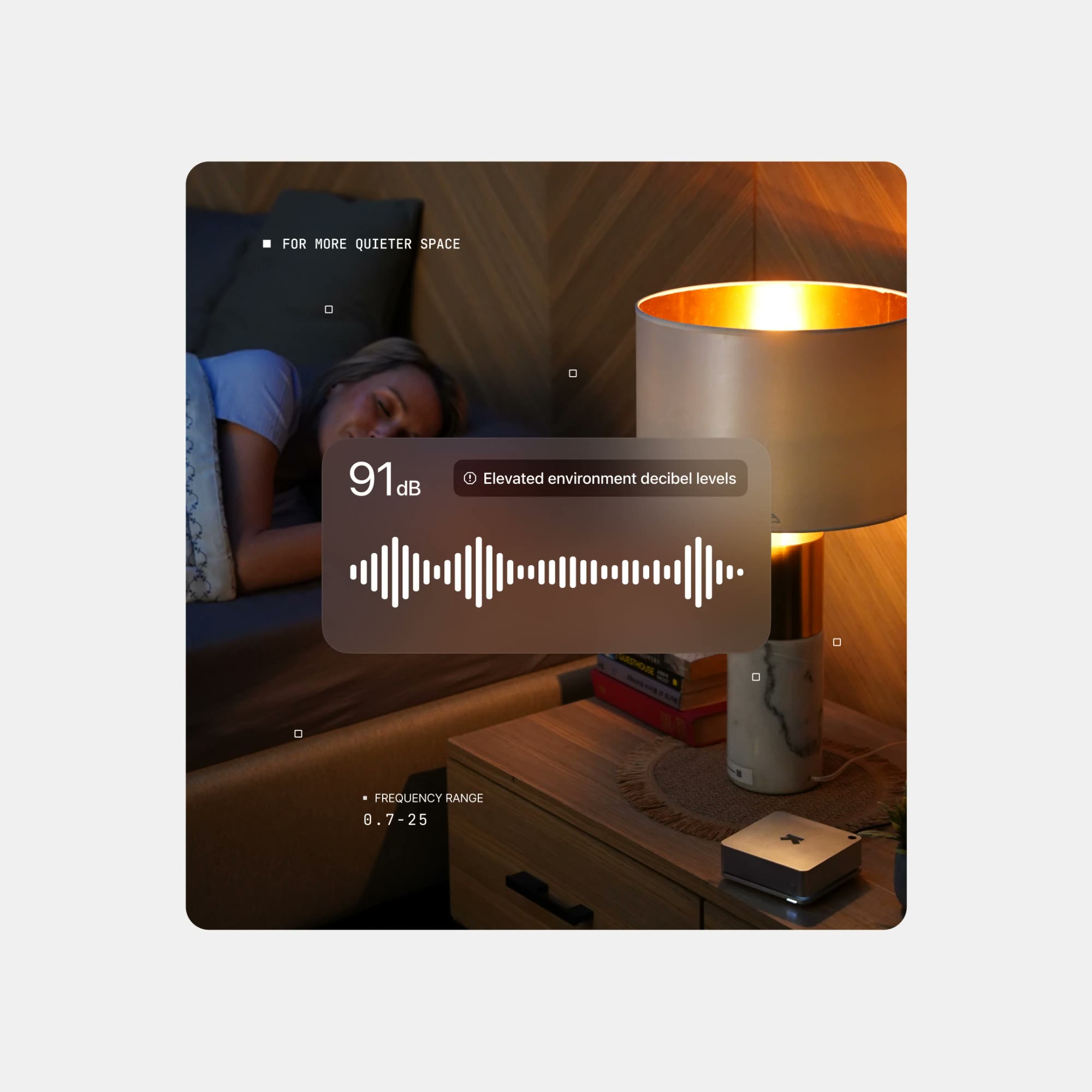
It answers to the house
Matter means the Home works with whatever the house already runs rather than asking for another app. The section plays through light, air and temperature control as three tabs, so it is seen fitting into something you own rather than claimed to.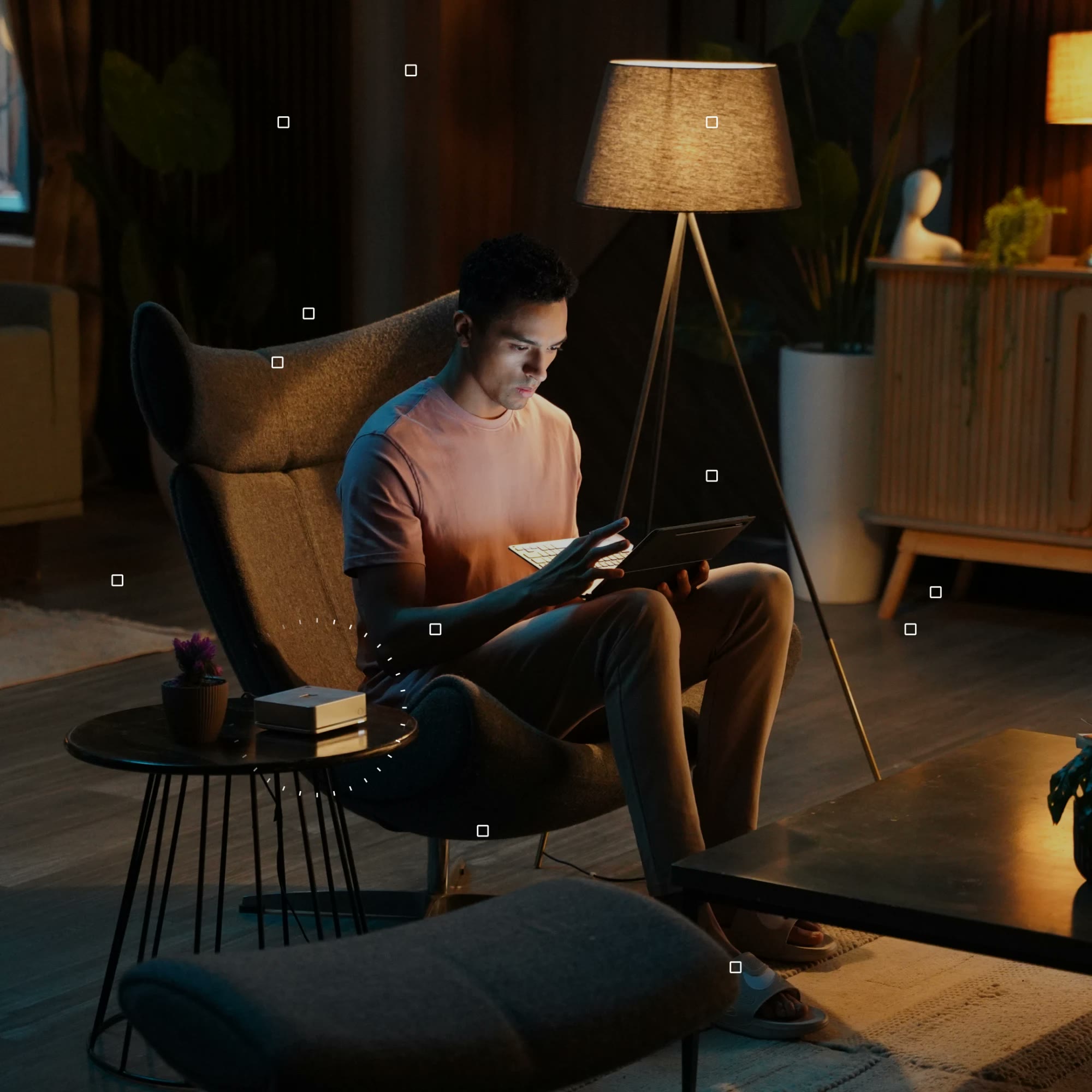
The number you wake up to
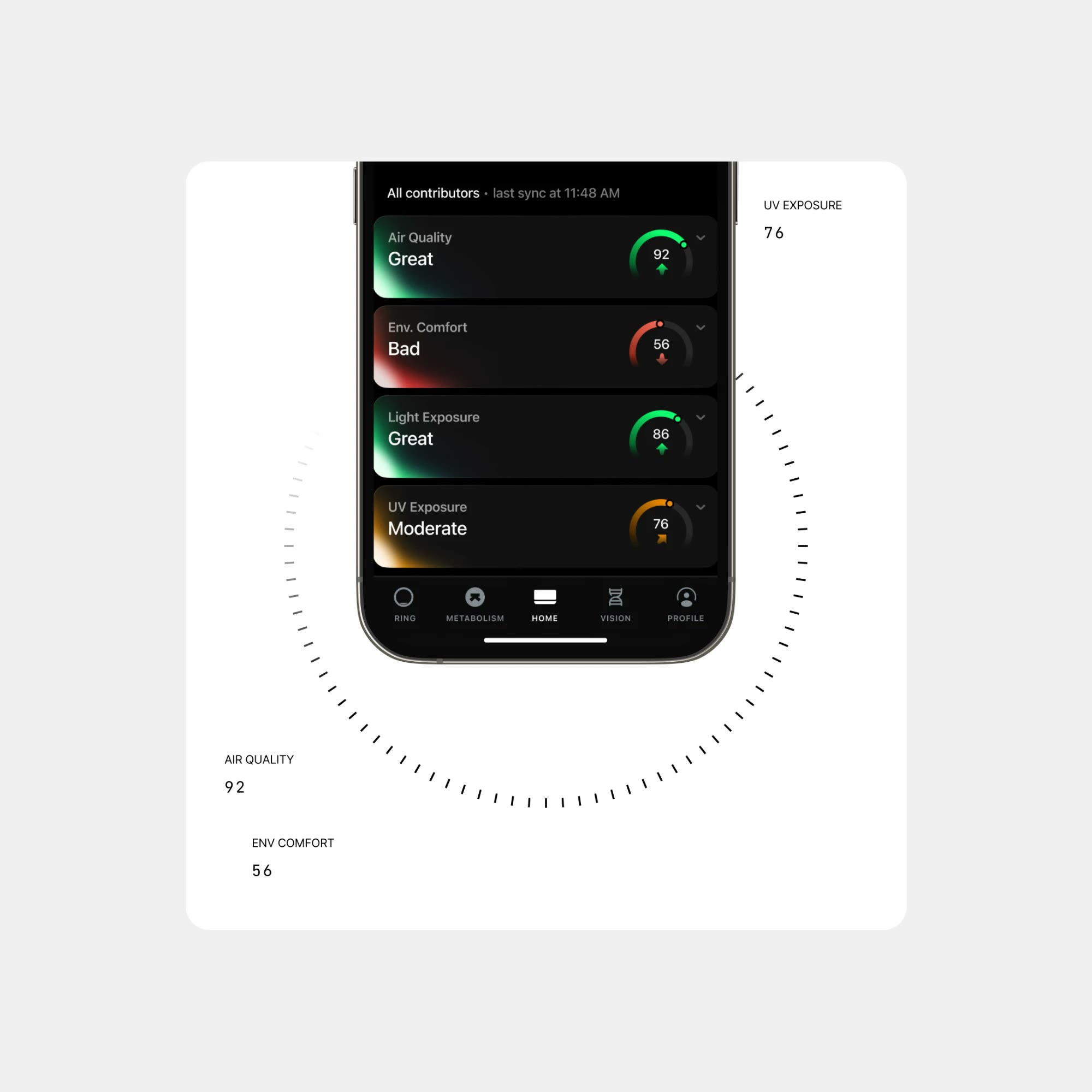
Two scores answer two questions here. The Room Score is the room as it stands now; the Ambient Sleep Score is the whole night resolved into one figure, and it is the first thing on the screen in the morning. It counts up as it lands rather than arriving finished, the bar beneath it marks the window you were actually asleep in, and sleep duration and silent time sit directly under that. Everything else is behind View Report, because at that hour one number and a verdict is all anyone wants.Three sounds on one night
Coughing, snoring and heavy breathing are counted apart and drawn across the same night. Each gets a colour and its own row of events, so the card answers when rather than how much: thirty-two minutes of coughing in two bursts is a different night from an hour and twenty-two of snoring in five long runs. The Respiratory Health Score sits above them at 64, taken here by the device on the shelf rather than by a phone on the nightstand, and the rows under it are the working.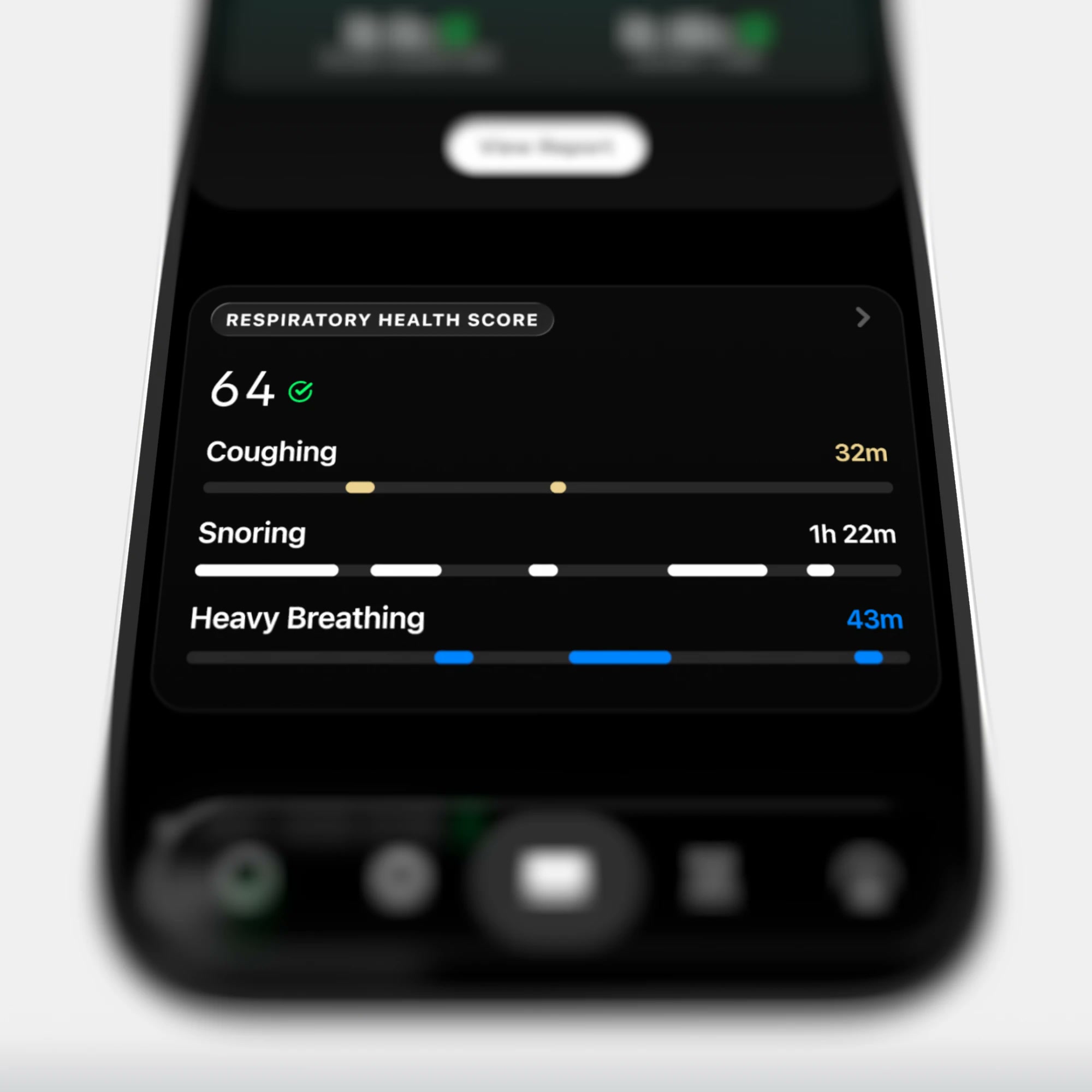
You can play the night back
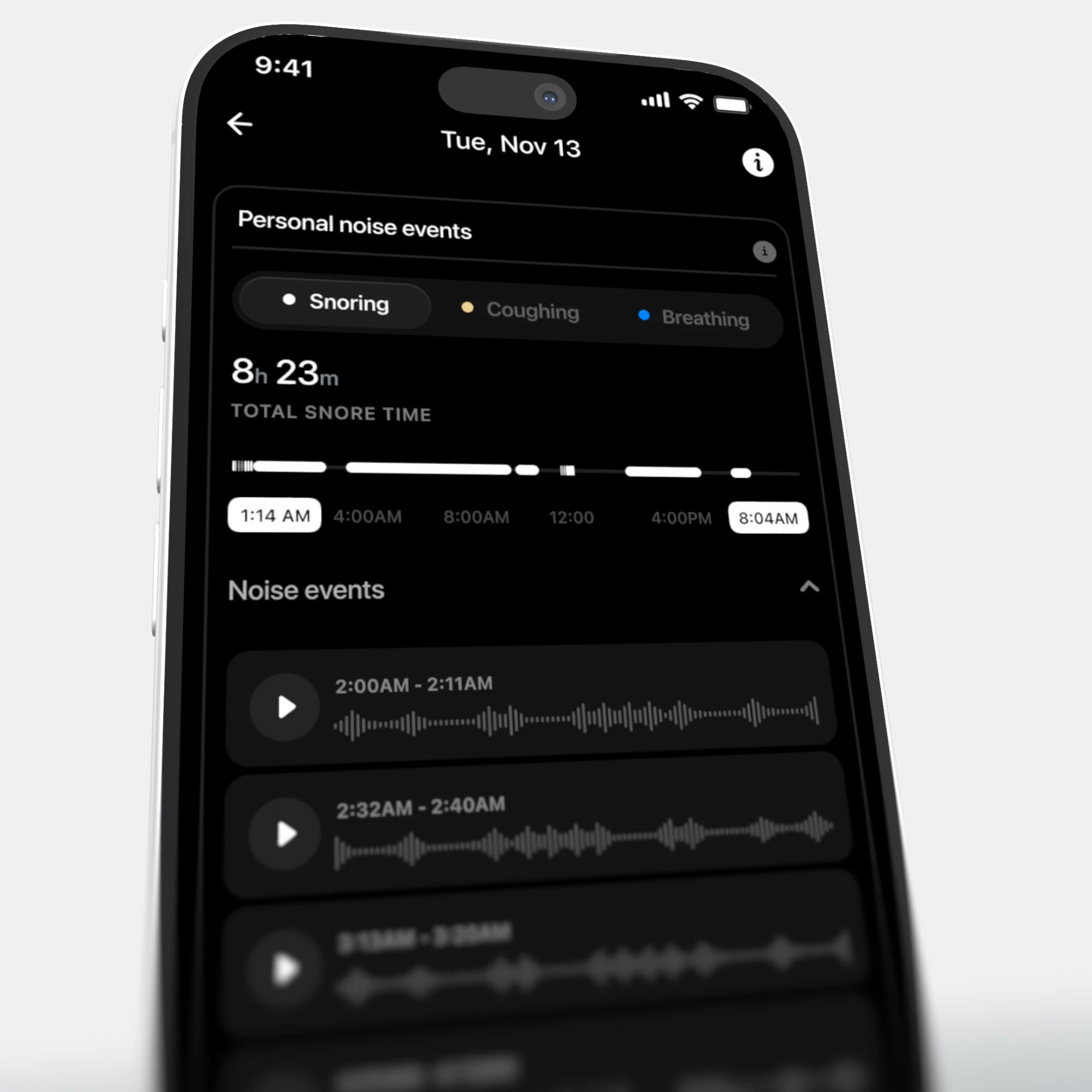
The detail page keeps the three sounds as tabs and gives each one the night in full: eight hours and twenty-three minutes of snoring laid out from 1:14 AM to 8:04 AM, and under it the events themselves, as recordings with a waveform and a timestamp. That is the one piece of evidence nobody argues with, and it is also exactly why the microphone switch and the two-day deletion are said out loud on the landing page instead of being buried.The screen takes the colour of the room
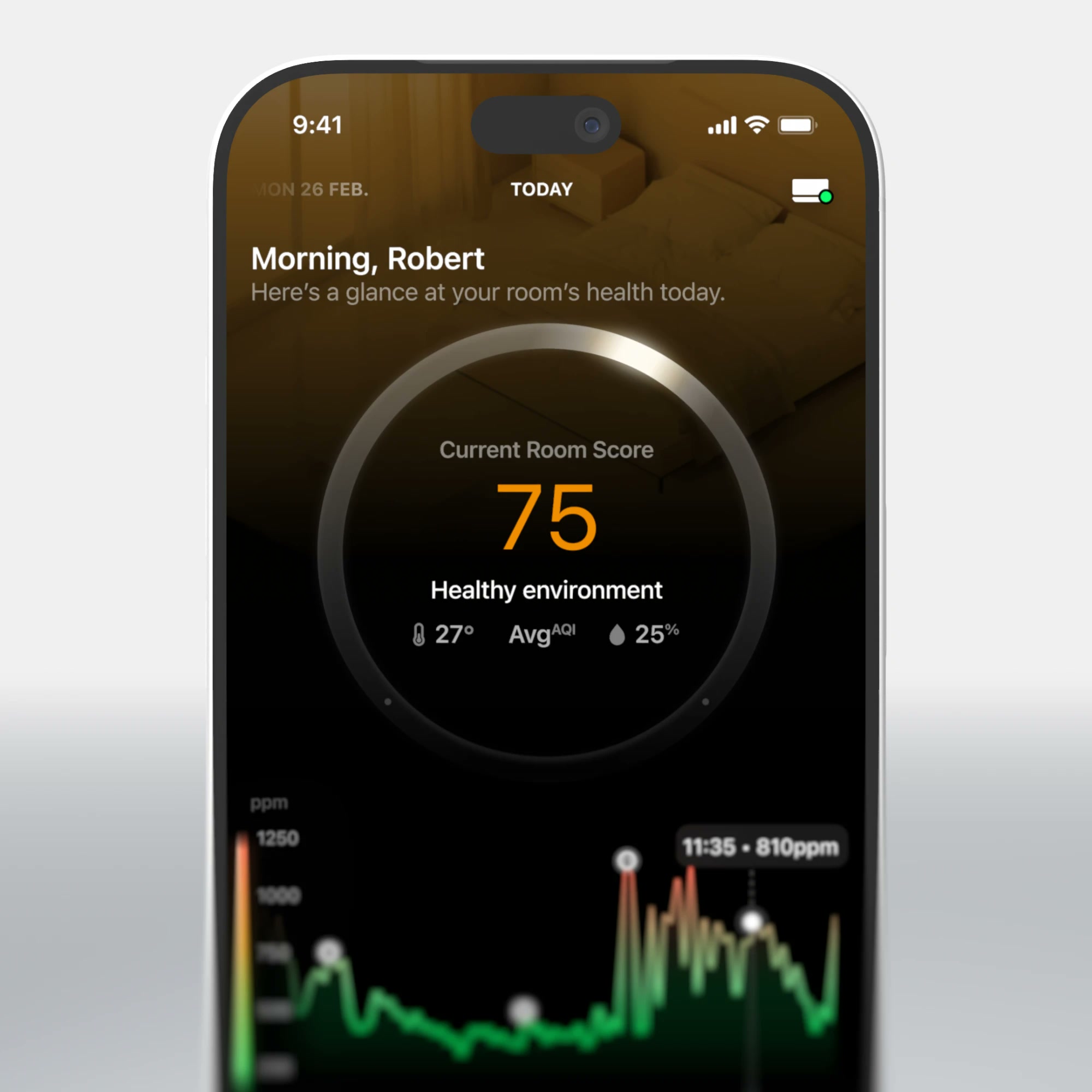
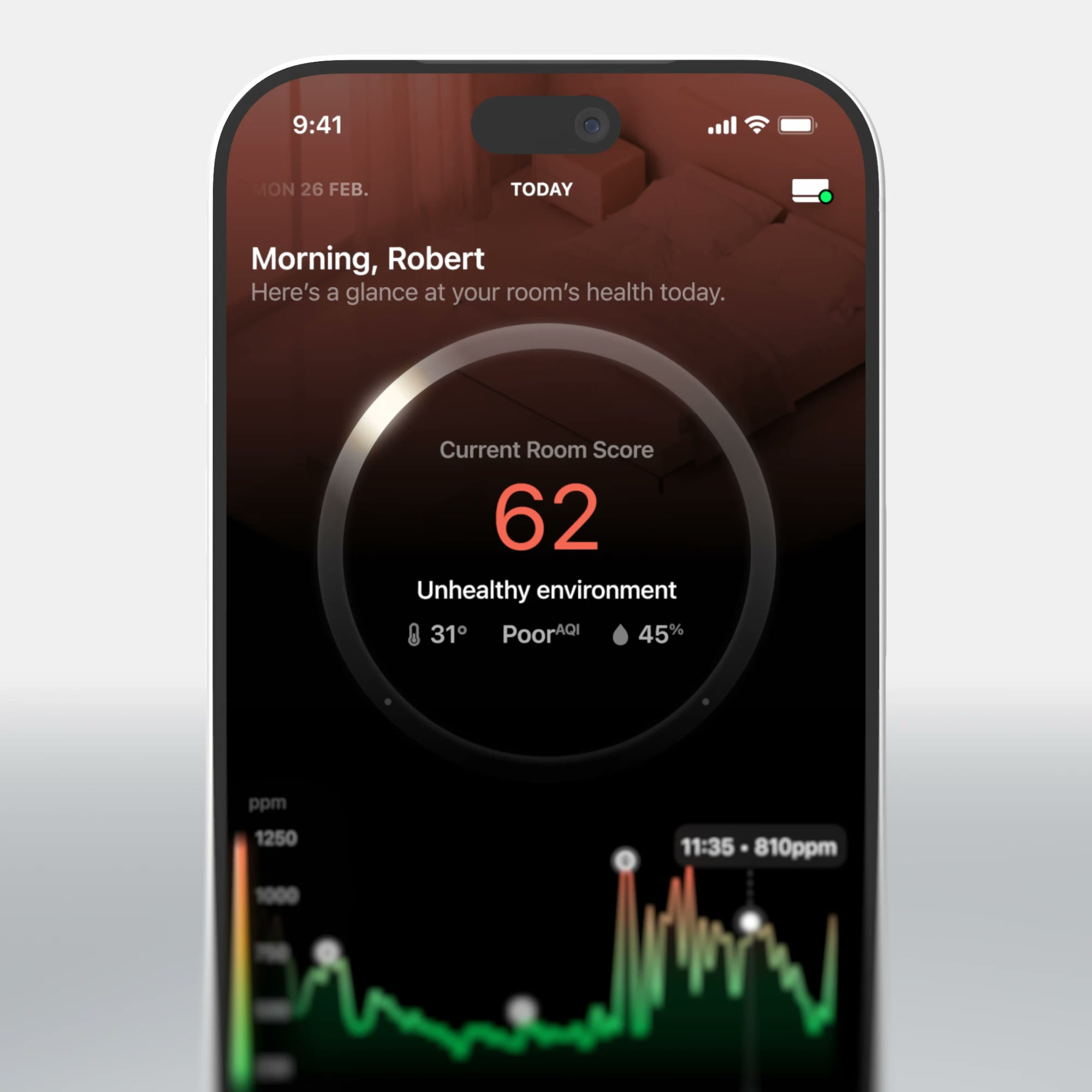
One screen, three nights. The Room Score sits in a ring that fills as the night goes, and the photograph behind it, the number and the ring all carry the same colour: green at 85, amber at 75, red at 62 with an unhealthy environment. The state registers before the number has been read, which matters on a screen most people open half awake.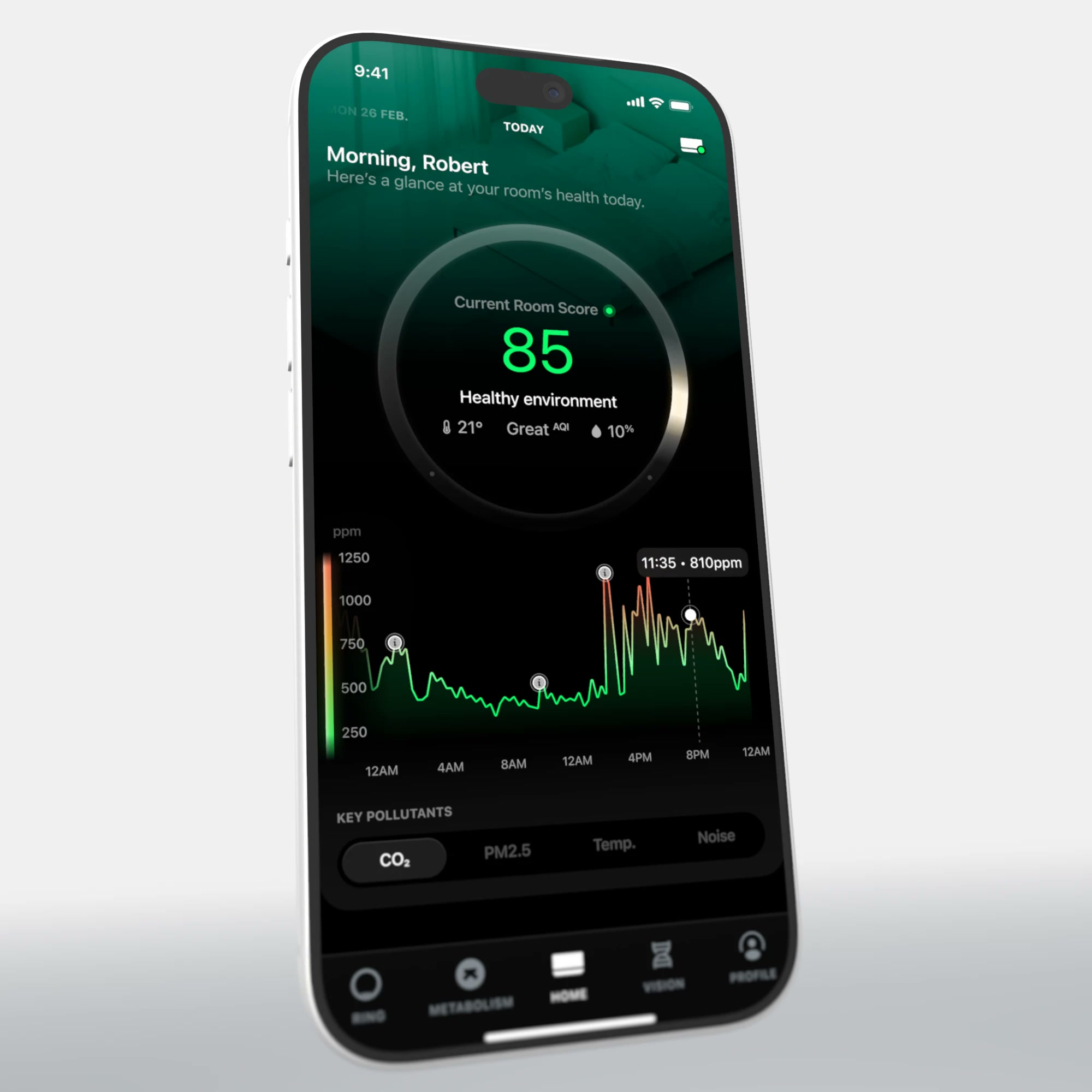
Marked only where something moved
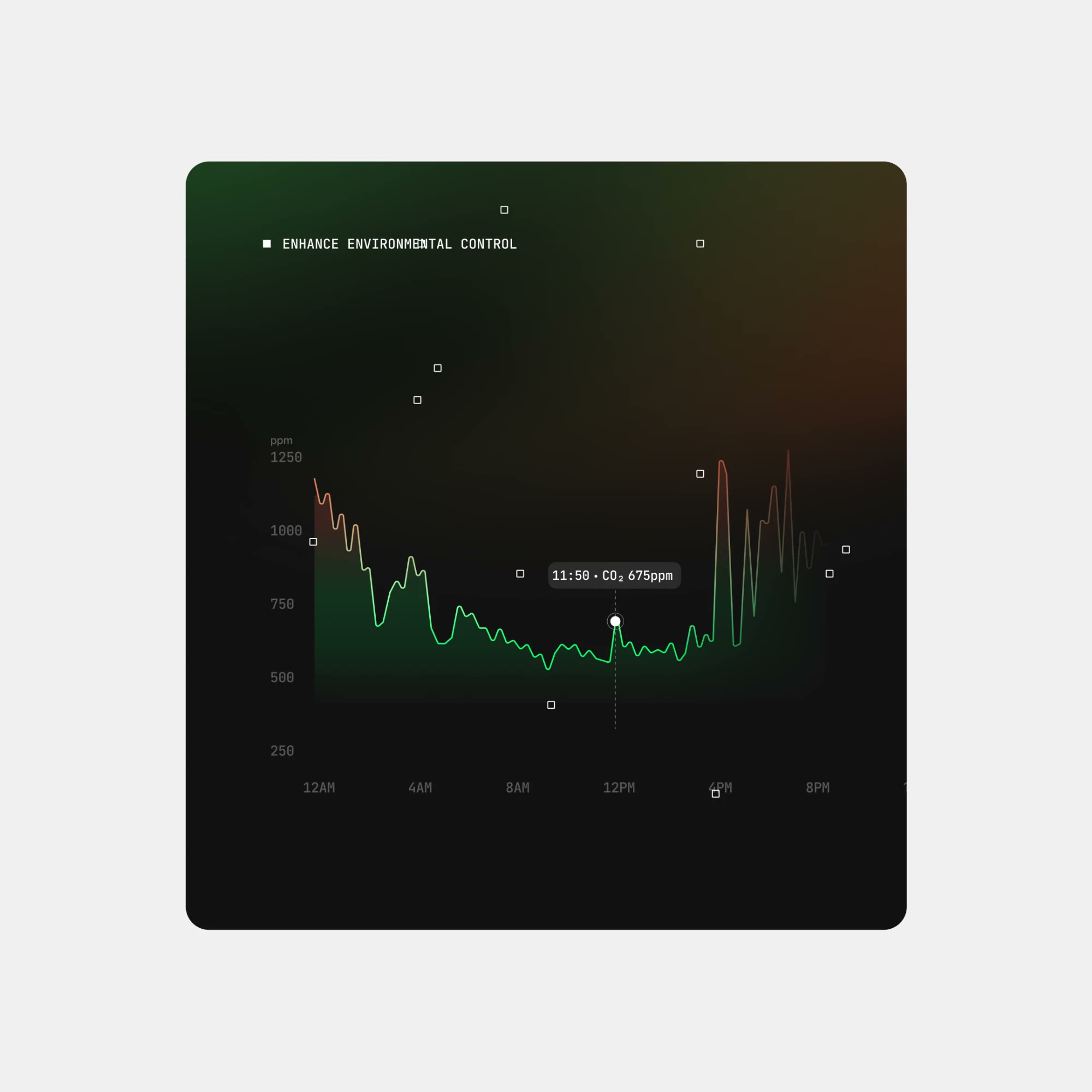
The Room Score opens into what made it, with carbon dioxide, PM2.5, temperature and noise as tabs under one chart rather than four pages. A night is mostly flat, so the line is marked only where it moved: small markers sit on the spikes carrying the reason, and the line itself runs green to red as the reading leaves its range. Nothing has to be read left to right.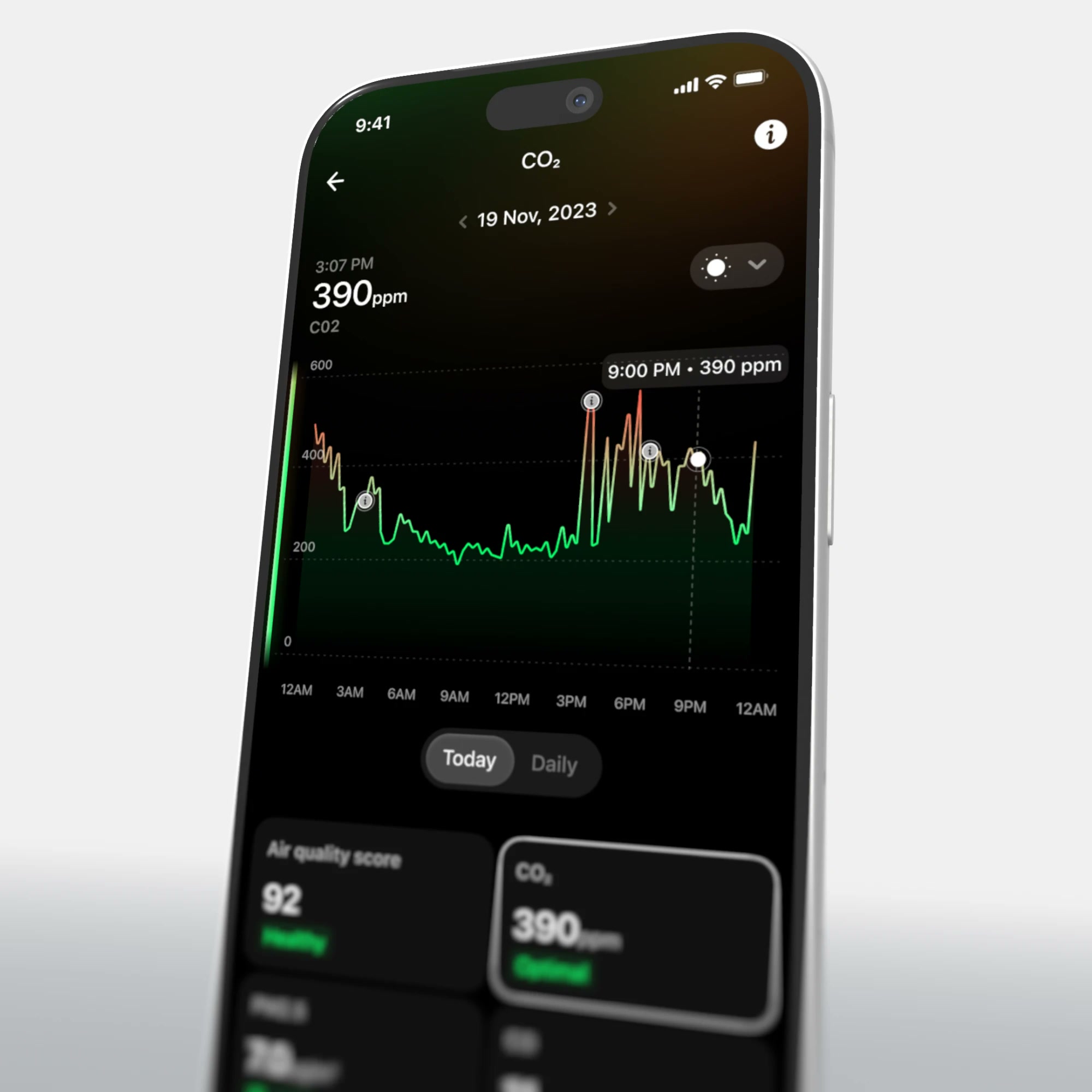
Noise arrives in events
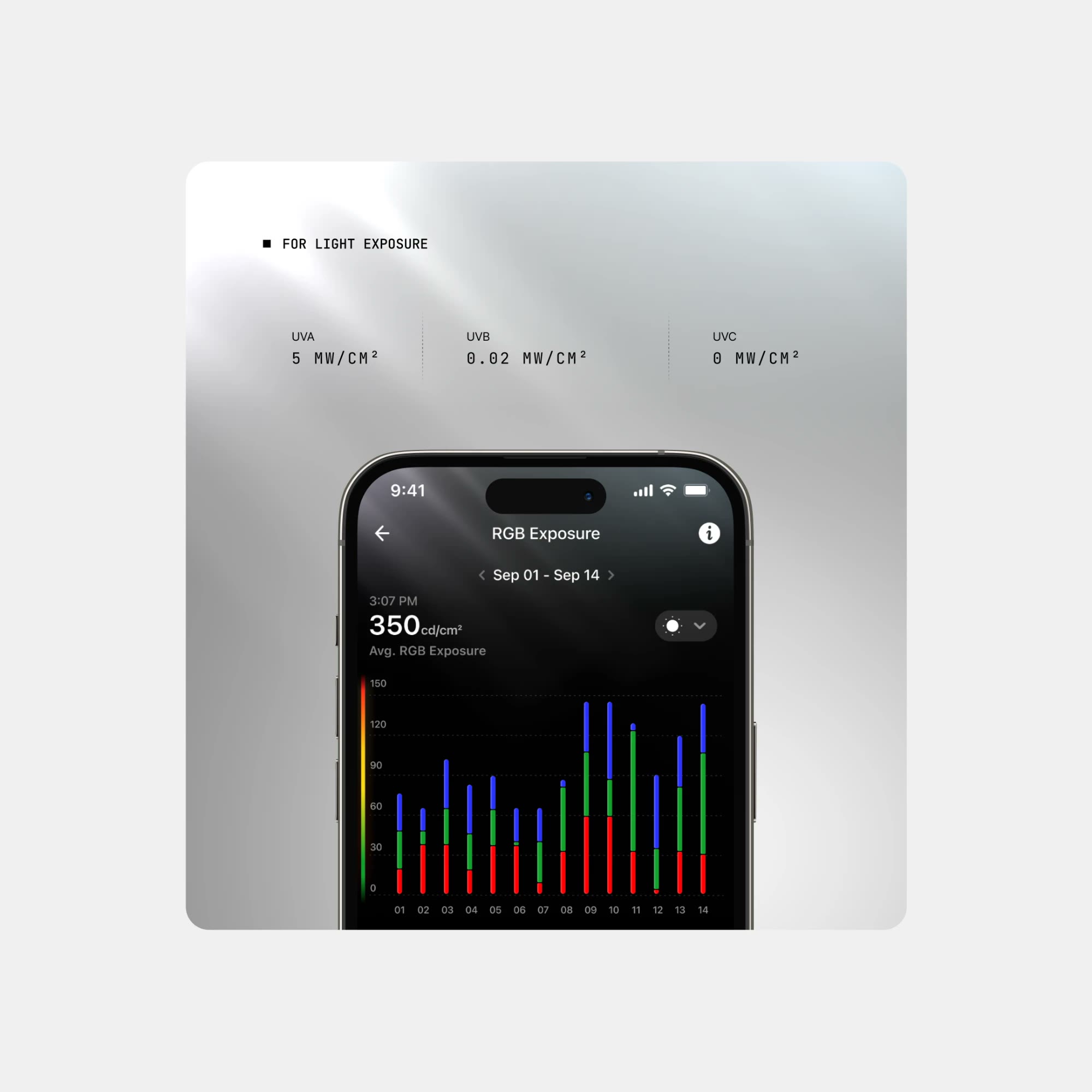
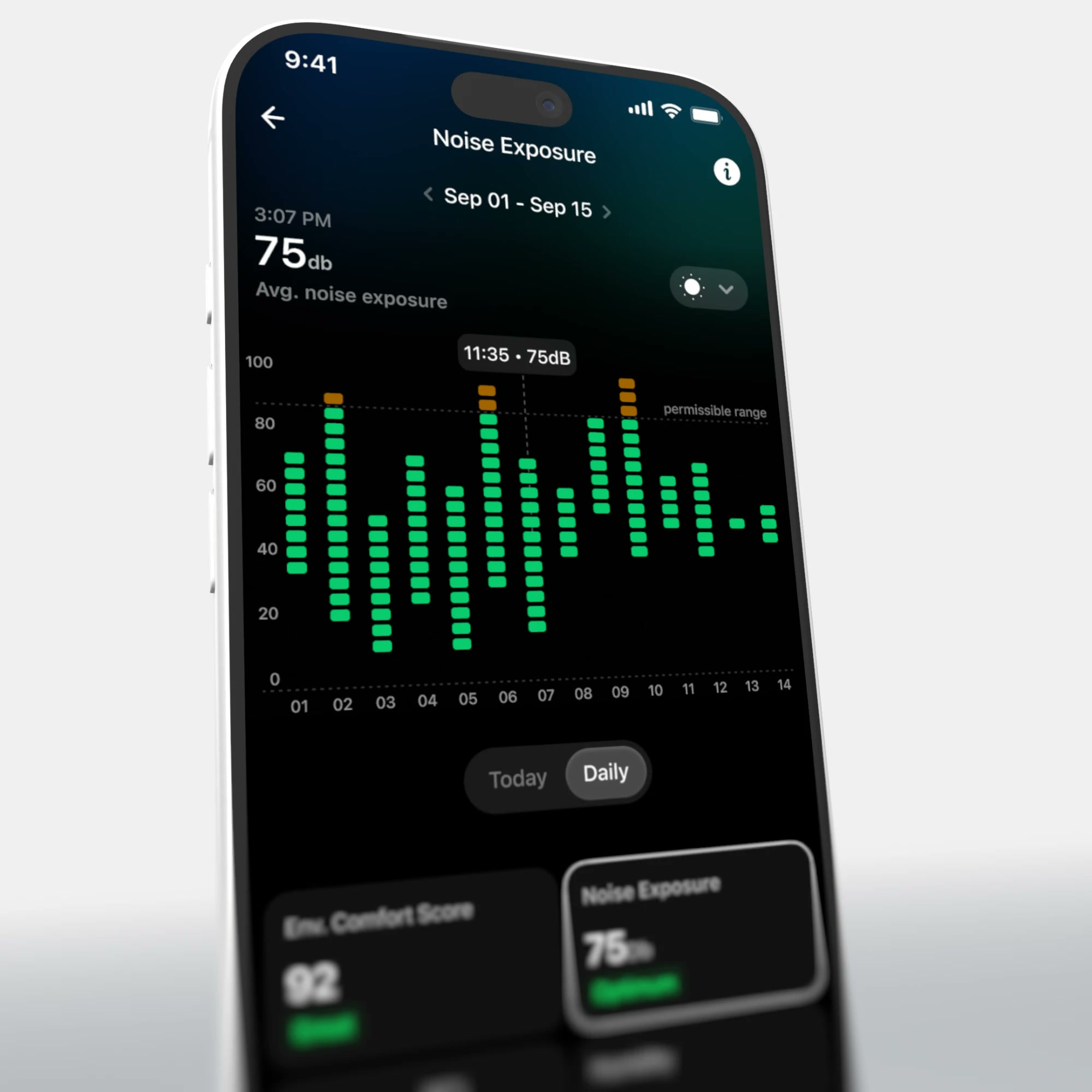
Noise is drawn as bars rather than a line, because it does not drift, it happens. The permissible range is ruled straight across them, so a bar breaking that line is the entire reading and the part above it changes colour instead of needing a legend. Two weeks fit on one screen, which is where a pattern starts to show.The first thirty seconds
Setup is the one part of this product a person consciously does. So the pairing screen shows the device rather than a spinner: it turns slowly while the phone goes looking for it, and the connection reads as the object arriving instead of as a status message. The first thing the app does is the first thing it has to get right.Taken apart to be believed
There is no screen and nothing that moves, so the only way to show what is inside was to open it. The section draws the device apart into its components and puts it back together as the page is scrolled. It is the one place where the engineering gets to speak for itself, and the only honest answer to a product that otherwise just sits there.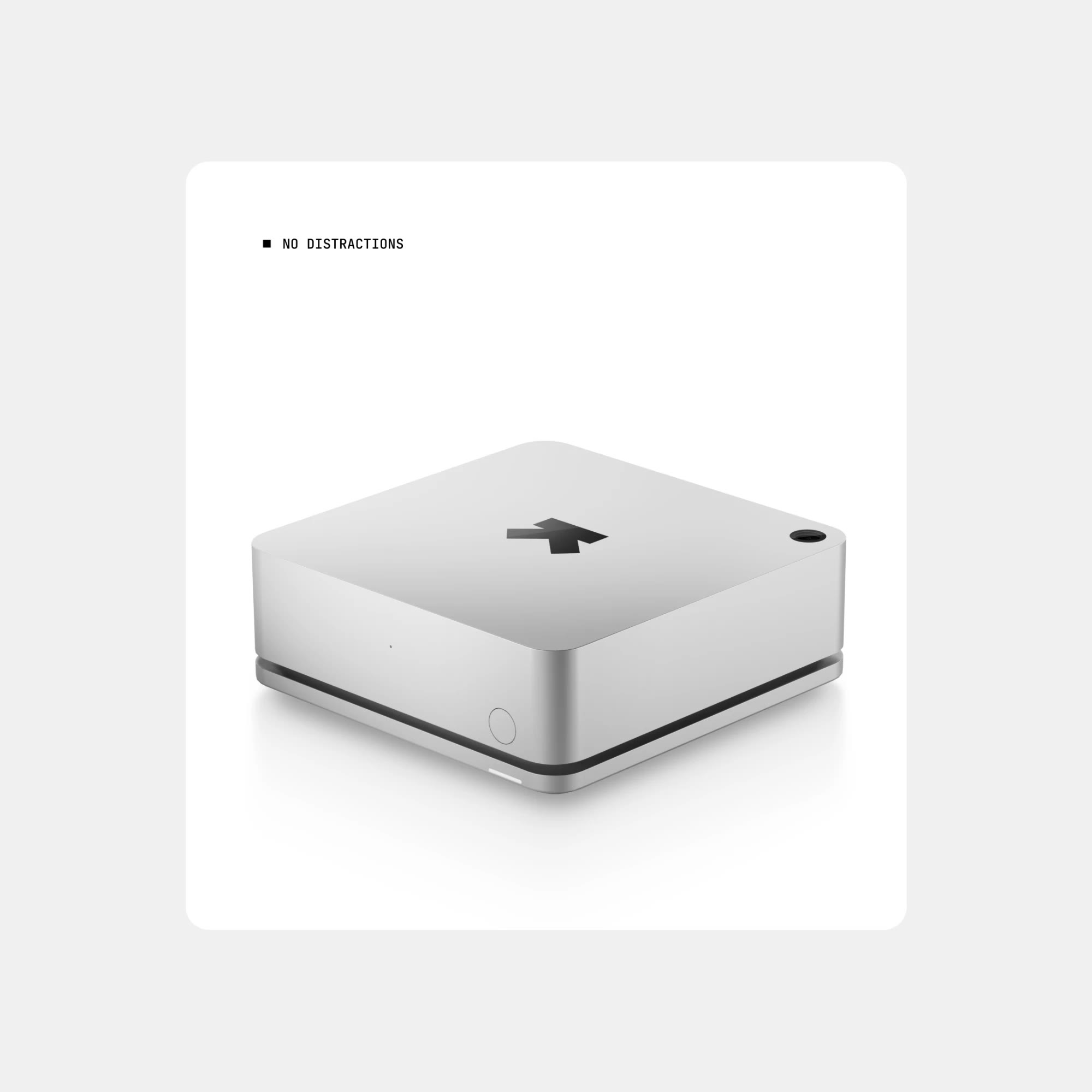
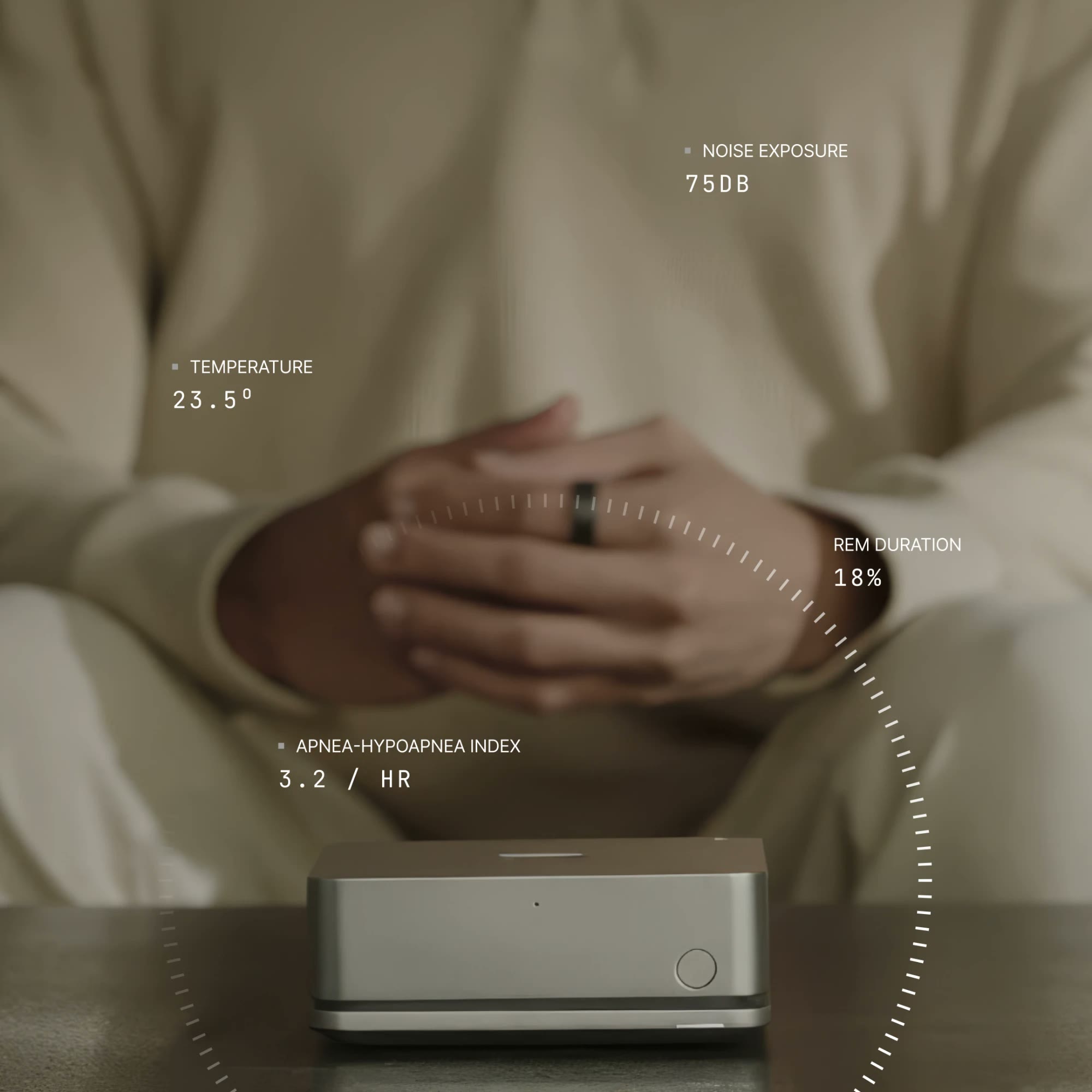
Made, not captured
With no screen on the device, nothing could simply be photographed. Every part of the explanation had to be built: renders that turn in the light, a page that assembles the product as you scroll, an app that resolves a night of readings into one number, and a pairing screen that shows you the device while it goes looking for it. The whole argument is made of things that were designed for it, which is the most enjoyable kind of brief there is.