Smart Alarm
The time you set is the latest it will ring.
Smart Alarm waits for a good moment to wake you instead of ringing on the dot. You set a wake time and a window before it, then say what a good night means to you. There are four ways to put it: hours of sleep, sleep cycles, a sleep index score, or paying off your sleep debt. Inside that window the ring watches your sleep and wakes you in the lightest phase it finds. If the night never gets there, the alarm rings at the time you set, and the app tells you which of the two happened. Most of the work went into making that clear. Everybody already knows what an alarm does, so being woken at 7:20 when you set 7:30 has to feel deliberate and not broken. I designed the whole feature: setting an alarm, the four ways of defining a good night, the ringing screen and the upcoming alarm alert.
Product Design: Nachiket Palkar. Built with the Ultrahuman app, backend and firmware teams.
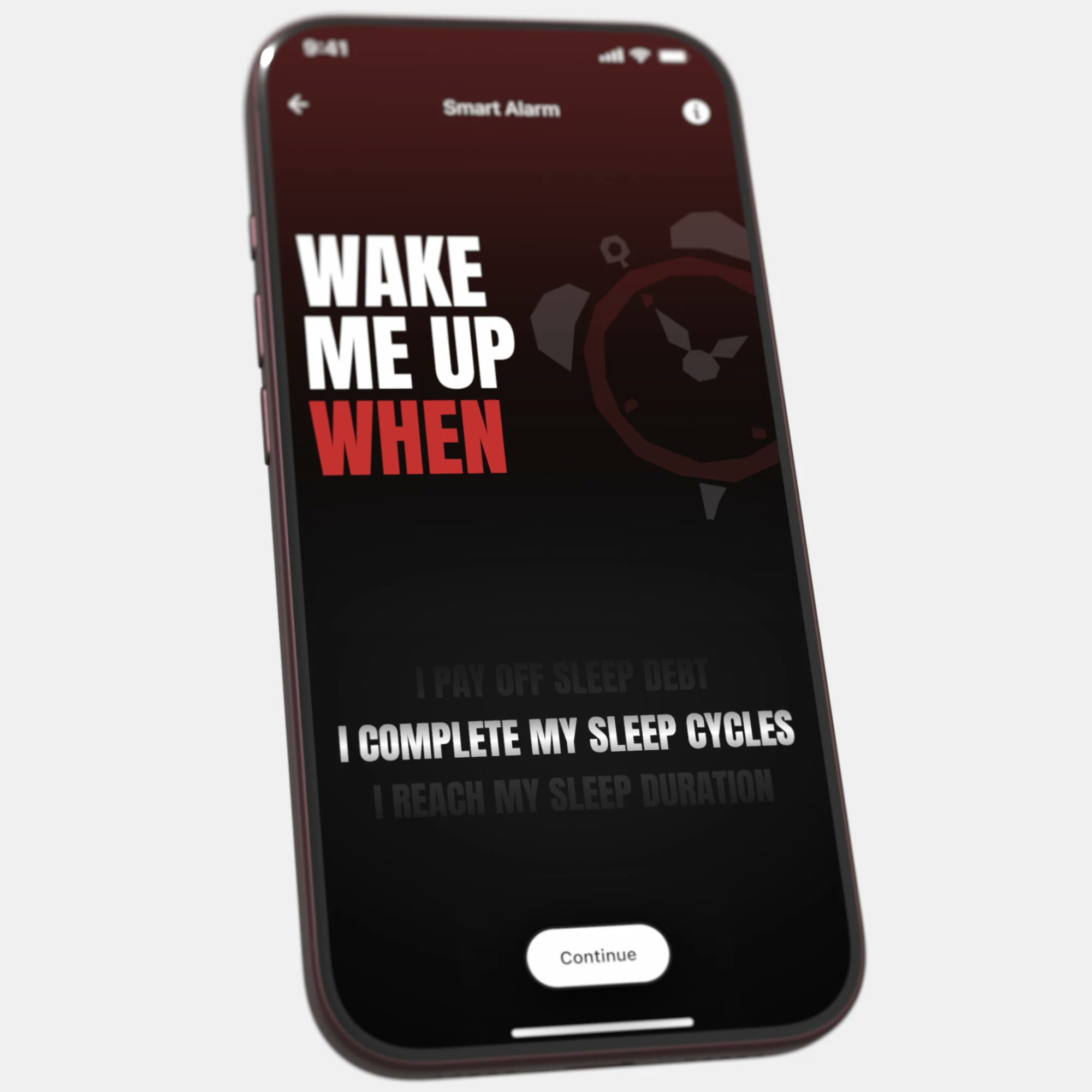

Borrowed from a record sleeve
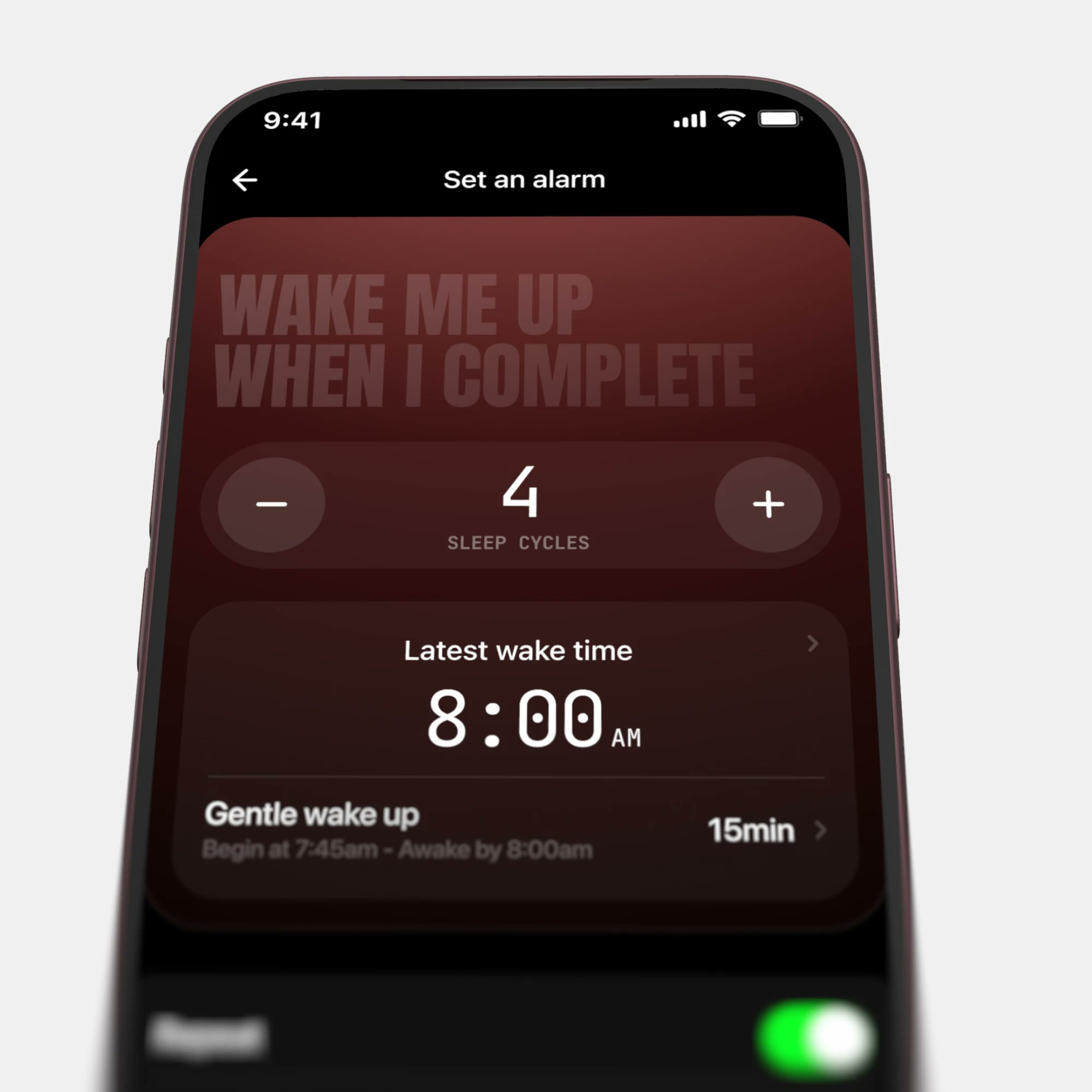
The look comes from Green Day’s American Idiot. The album has a song called “Wake Me Up When September Ends”, which is about as close as a song gets to being an alarm, so it became the reference for the whole feature. The red, the heavy condensed type and the blunt wording all come from the record. The rest of the Ultrahuman app is calm and quiet. This part is not.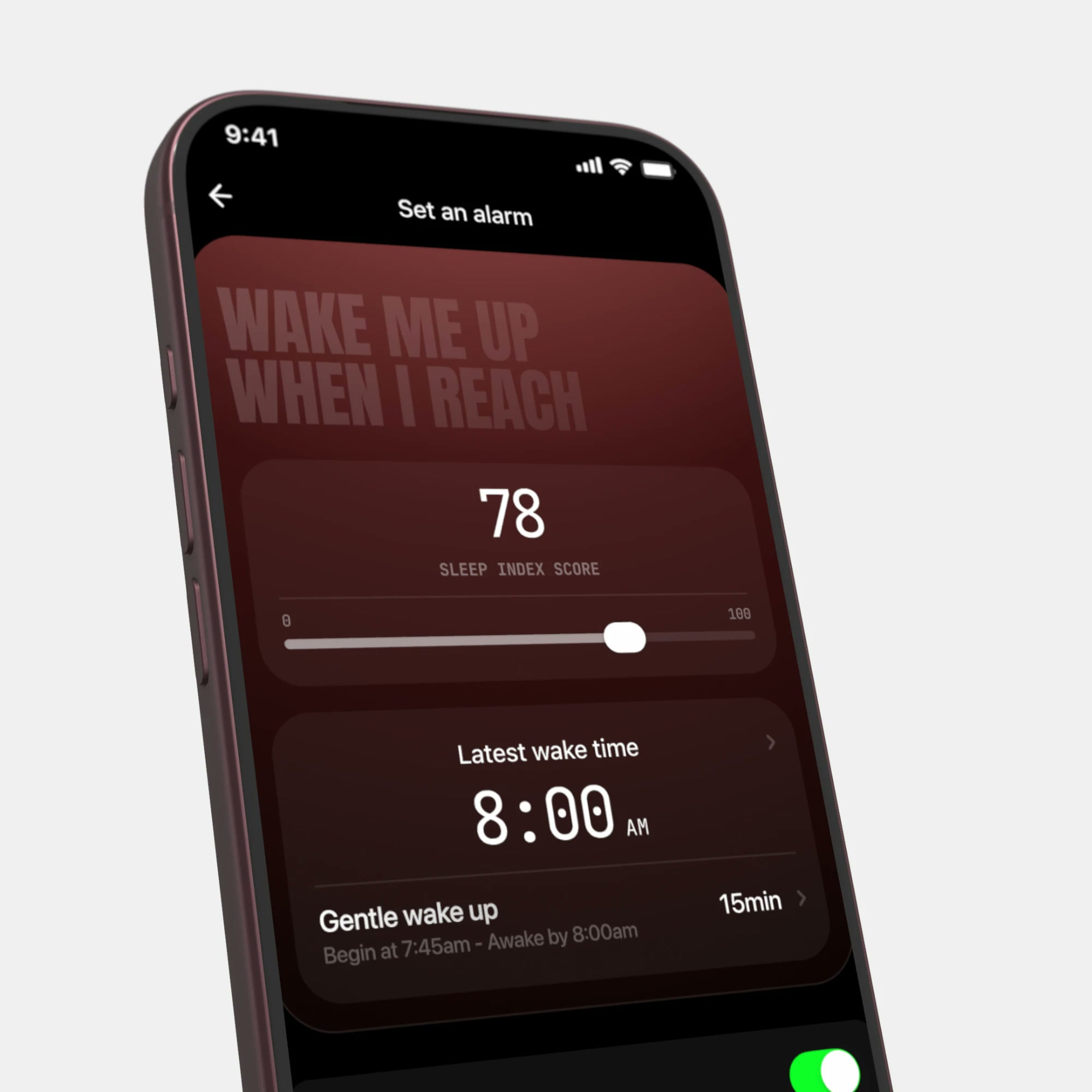
Four ways to say it
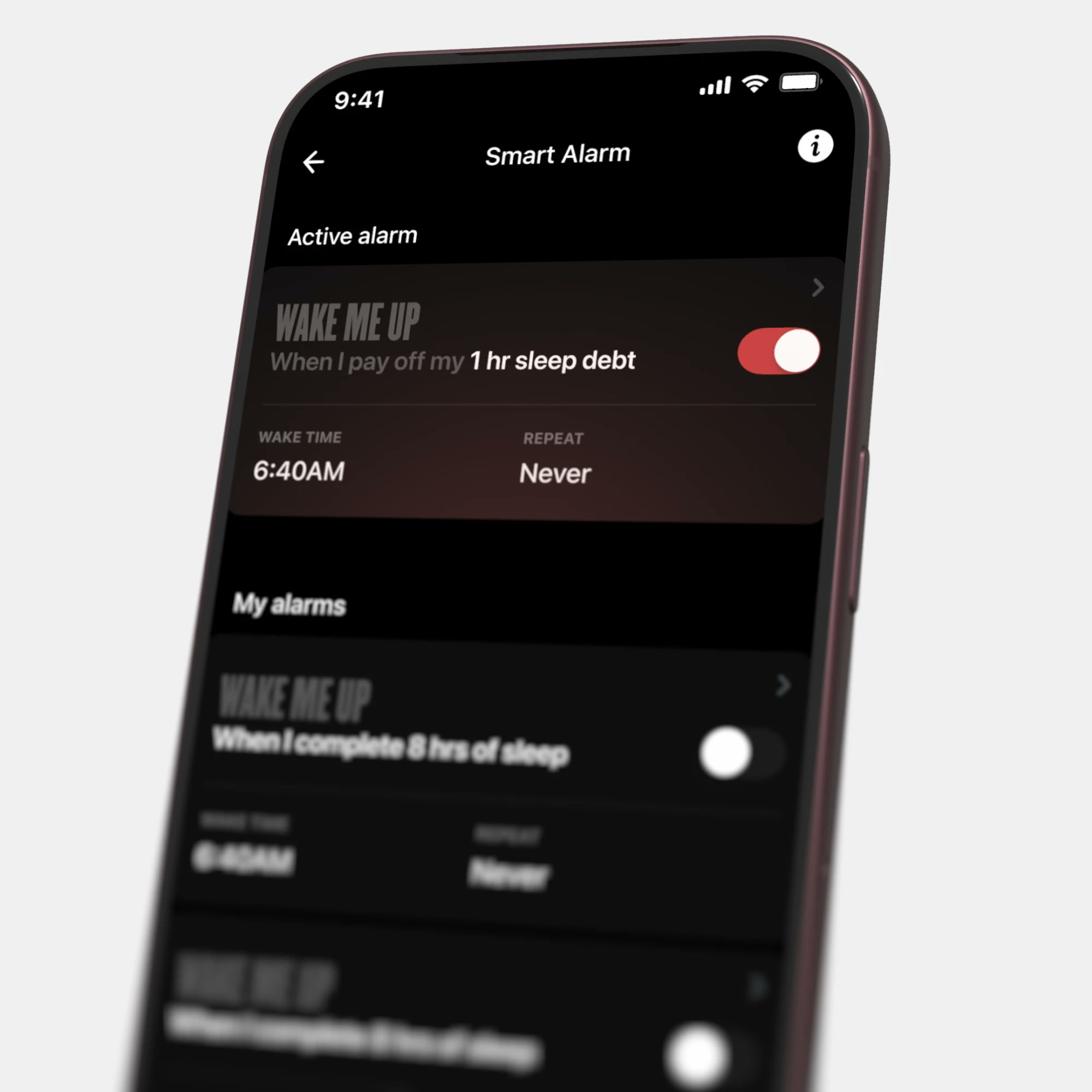
A good night means different things to different people, so the alarm asks four ways: hours of sleep, sleep cycles, a sleep index score, or a sleep debt paid off. Each asks for what it actually needs, a stepper for hours and for cycles, a slider from 0 to 100 for the index. What stays fixed under all four is the latest wake time and the length of the gentle wake up, because those are the two promises the alarm keeps whichever target you picked.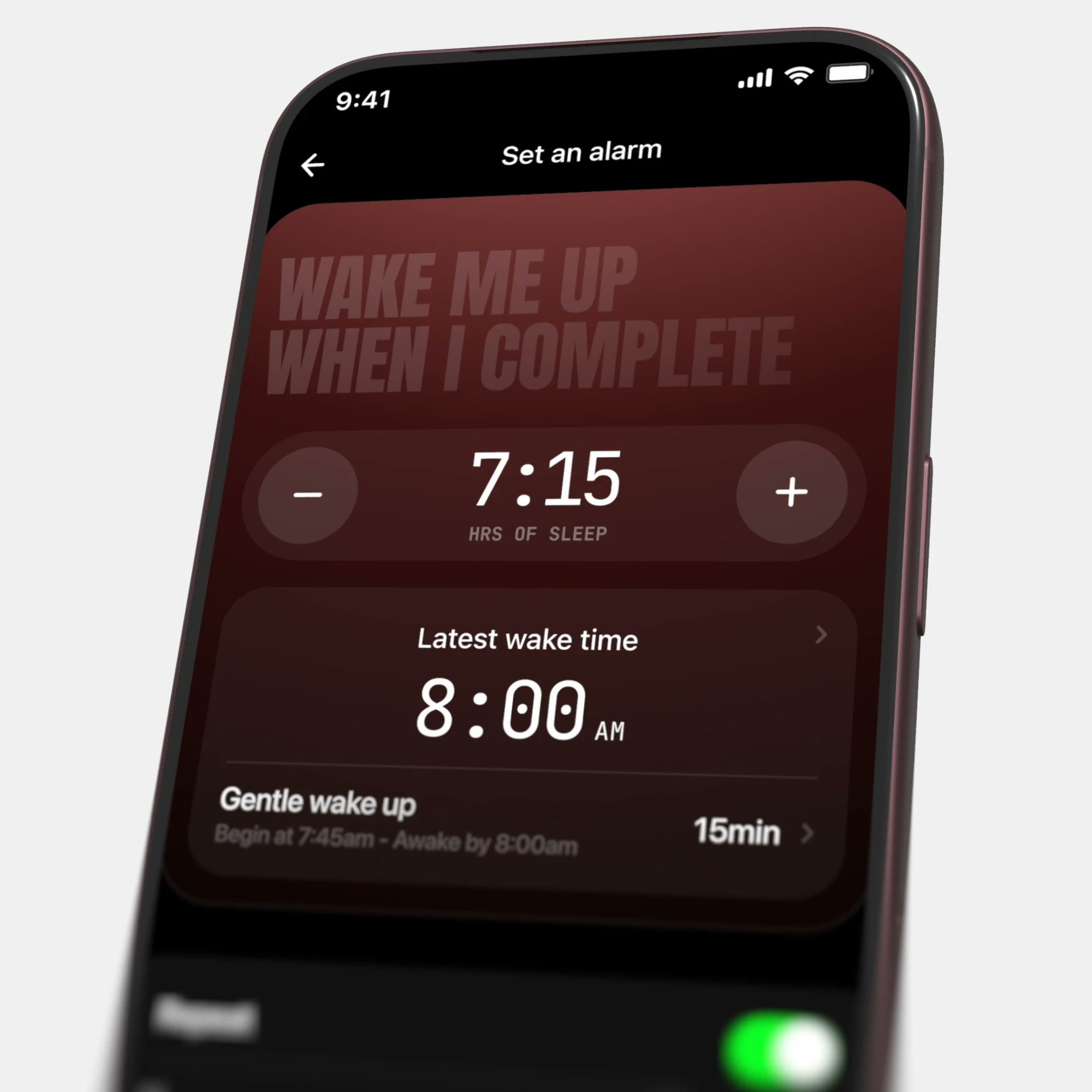
One card, two jobs
One card doing two jobs. The top is tonight: whether the alarm is on and what it is waiting for. The bottom is last night: how close you got and whether you finished your cycles. The result and the plan sit together, so you never have to open the alarm just to check it is still set. A night that falls a little short is not drawn as a failure, because it is not one.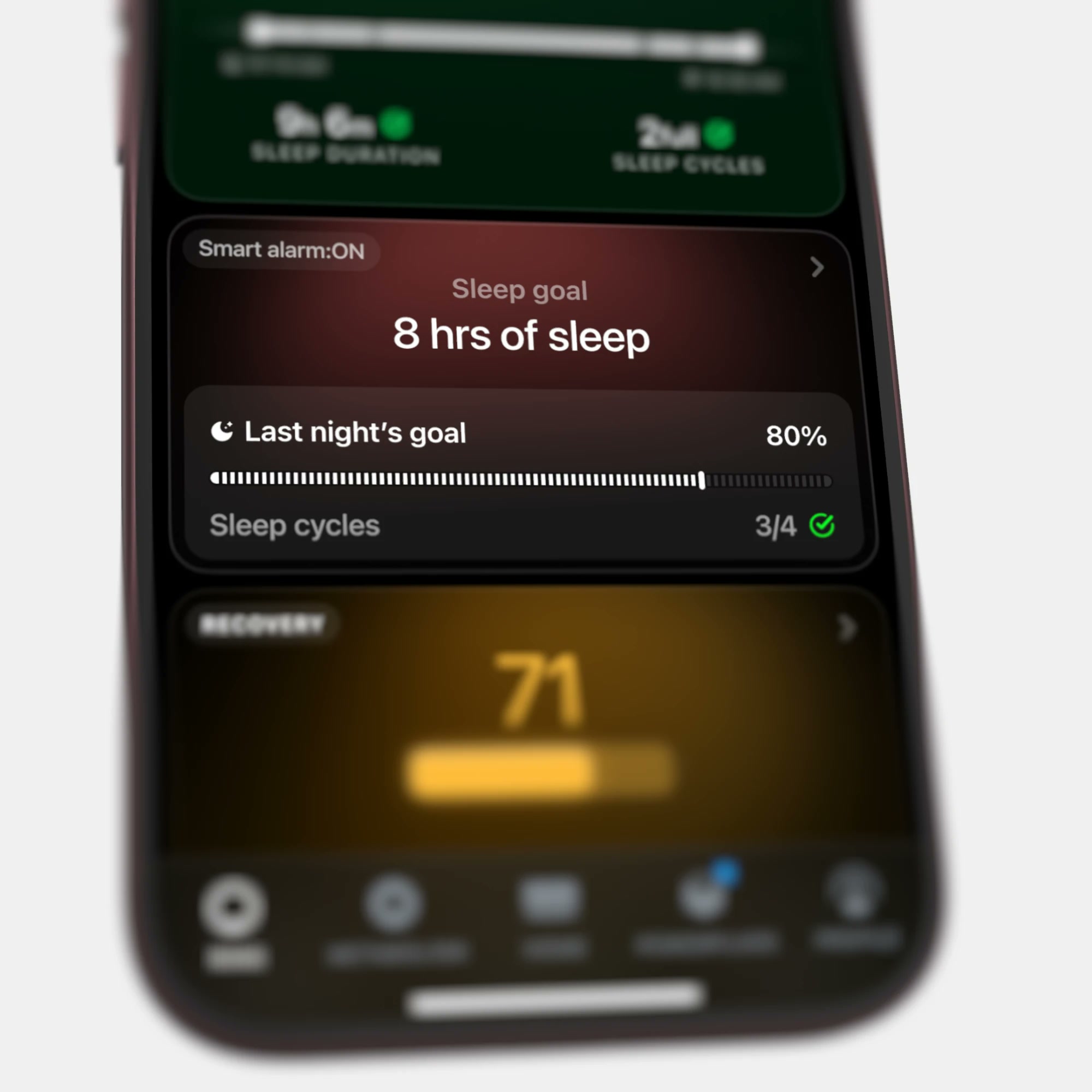
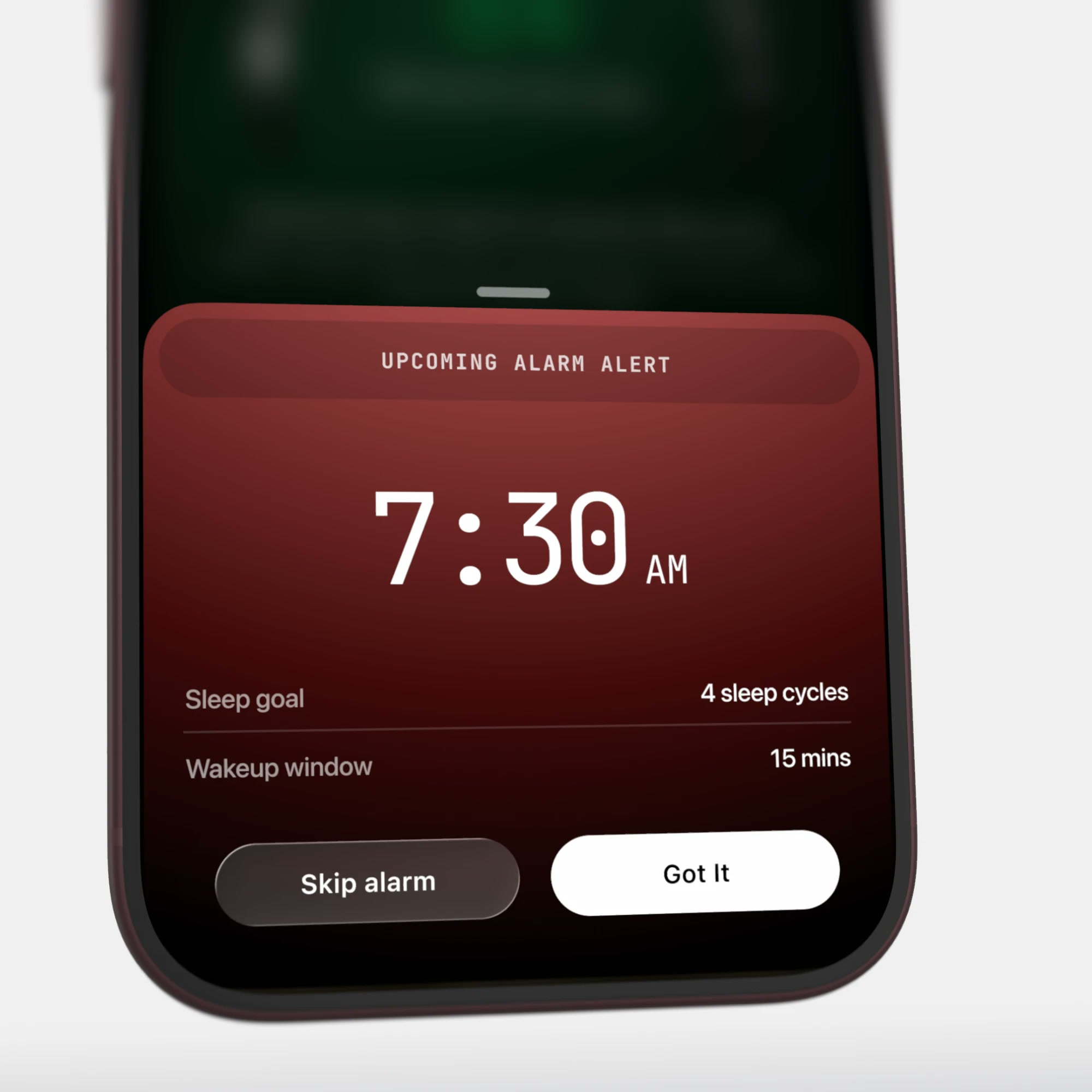
Ringing early on purpose
An alarm that rings early has to prove it meant to. The alert the evening before states the target and the window, so an early ring is expected before it happens rather than explained afterwards. The Dynamic Island carries the armed alarm through the night and can stop it without opening anything. And the morning card says whether you were woken on your target or at the latest time, which is the whole difference between deliberate and broken.